


In the heart of India’s capital, the banks of the Yamuna River should stand as a place of devotion and “Yamuna Turns Toxic Again: After Chhath Puja Clean-Up in Delhi” renewal. During this year’s Chhath Puja, that promise was visible: thousands of devotees gathered at the newly cleaned ghats, seeking purification and hope by offering arghya to the rising and setting sun.
Yet, within days of this spiritual high point, the same river is showing old scars: accumulated waste, rising pollution markers, and frustration among residents and experts who wonder how fleeting the ‘cleanup’ has been.
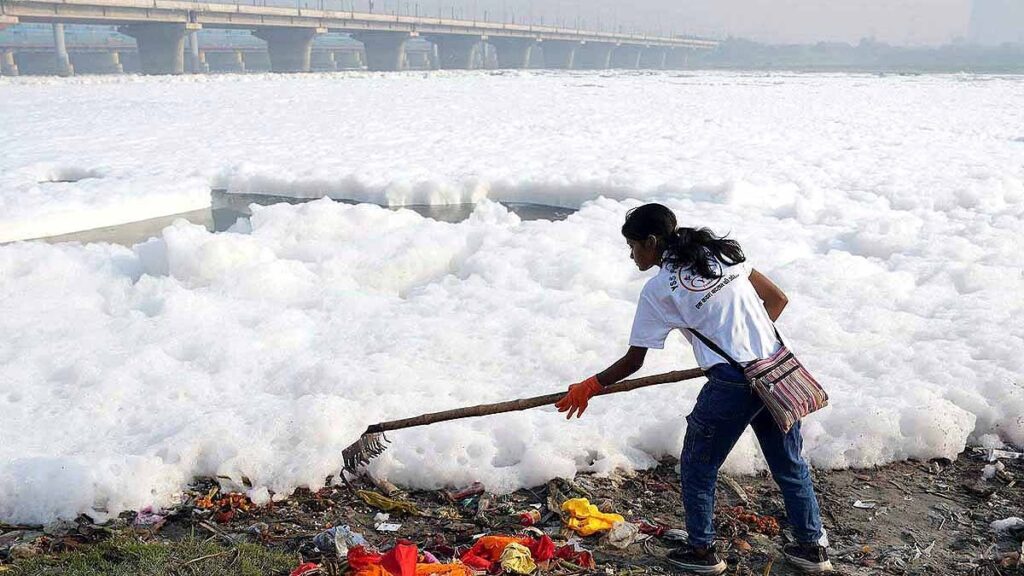
The promise of cleanliness and celebration: After Chhath Puja
In the lead-up to Chhath, the Delhi administration plans to transform the ghats of Yamuna from a utilitarian riverbank to a spiritual one. Reports suggest that more than 1,100 ghats were prepared, tents were erected, lighting was installed, and portable toilets and drinking water facilities were deployed. It seemed like a proud moment: devotion, culture, community, and environment coming together.
Yet the reality is far more complex
Despite preparations, the underlying water quality tells a different story. A recent report by the Delhi Pollution Control Committee shows that in stretches of the Yamuna within Delhi city limits, key pollution
parameters—for example, biochemical oxygen demand (BOD)—are well above safe limits. The levels at Delhi’s entry points like Palla or Wazirabad were close to acceptable, but downstream (ITO bridge, Nizamuddin, Okhla) the readings touched 20-23 mg/liter—almost far above the safe limit.
Additionally, a ground investigation conducted by independent media found that dozens of major drains continued to discharge untreated sewage into the river, animal carcasses were seen floating, and what was being presented as a “clean river” was actually a sham of more water releases or isolated cleanups rather than a systemic overhaul.
Clean-up efforts, but short-lived gains
Right after Chhath, city officials admitted that huge piles of garbage—garlands, leftover food, plastic bottles, and disposable plates—remained on the riverbank. At one ghat he noticed that although cleanup had begun, it would take several days for a handful of laborers to clean up the mess.
The problem: Ritual activity is rampant, but the infrastructure to deal with the waste, and more importantly the flow of polluted water downstream, has only been partially addressed.
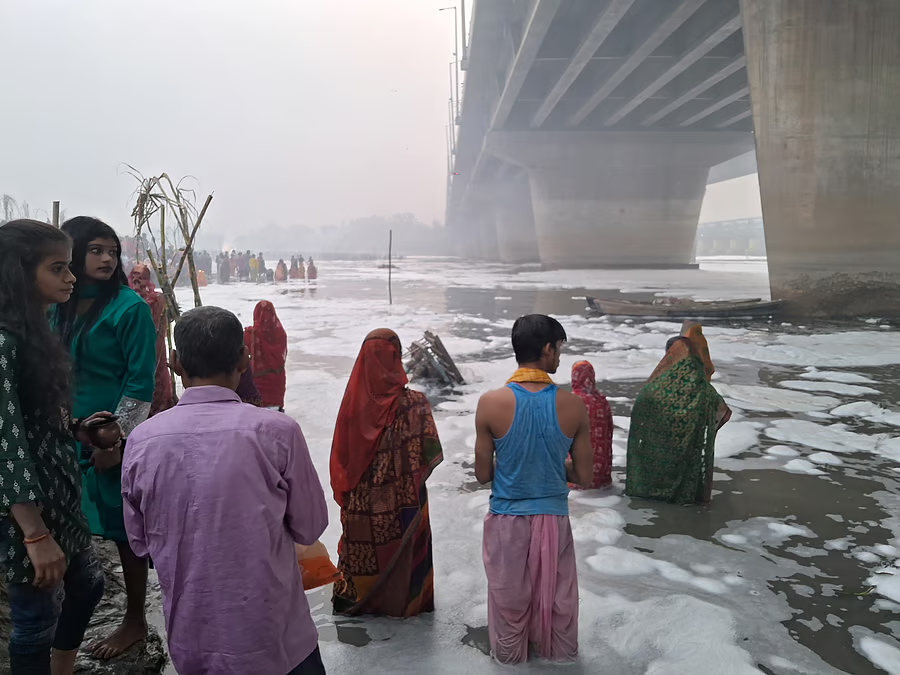
Why the river is still struggling
- Inadequate flow : In many stretches of the Yamuna in Delhi, environmental flow is inadequate to reduce incoming pollution.
- Untreated sewage and drains : Despite decades of planning, major drains still carry untreated or partially treated waste into the river.
- Pollution hotspots downstream : While upstream sections look better, core urban areas remain heavily polluted.
- Temporary measures : Pre-festival clean-up drives are laudable, but they do not replace year-round systems of monitoring, remediation, and riverbank management.
The human cost and spiritual contradiction
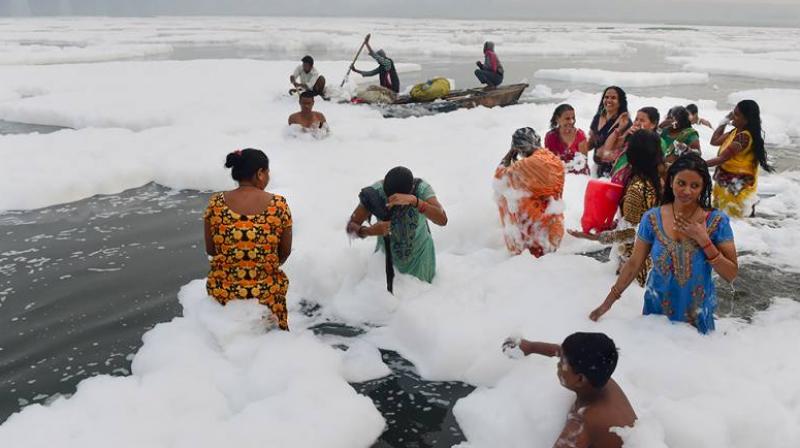
For Chhath vratis—many of whom are migrants from Bihar, Jharkhand, and Uttar Pradesh—the Yamuna holds sacred meaning. They come to give thanks, to fast, and to pray. And yet the river they step into may be polluted, posing a health risk, which is contrary to the sanctity of the ritual. A fisherman said, “The pollution has not reduced. They have just released more water to make it look clean. Once Chhath is over and the flow reduces, the Yamuna will turn black again. The sense of dissonance between cultural reverence and environmental disregard is striking.
What needs to change
- Continuous, not episodic, cleaning: Festivals should not be the only time when the river is taken care of. Real-time monitoring and action should occur daily.
- Upgrade sewage and storm-drain infrastructure: unblock major drains and treat waste before it enters the river. Ensuring environmental flow: Sufficient water must be released upstream and retained to safely carry sediment and pollutants downstream.
- Community/Management Involvement: Local communities, NGOs, and devotees should be partners in making the riverbanks respectable and clean throughout the year, not just during festivals.
- Transparency and accountability: Data on pollution, treatment plants, and discharge points should be open. “Clean rivers” claims must be supported by measurable, verifiable improvements. As one opinion succinctly put it, “The Yamuna can indeed be cleaned—but only if we abandon the shortcuts.” Indian Express
Conclusion
On this Chhath, the banks of Yamuna were alive with faith, lights, devotion, and traditions. But a few days later, the river reminds us that mere celebration does not heal environmental wounds. To truly reflect the hope and sacredness of the rituals performed on the ghats of Yamuna, the city must commit to cleansing its soul—not just for festivals, but for every day. The river deserves more than ceremonial adornment. It deserves respect, resilience, and restoration.
Home Page More Info